




Big Bang VS phased migration: main Benefits and Drawbacks
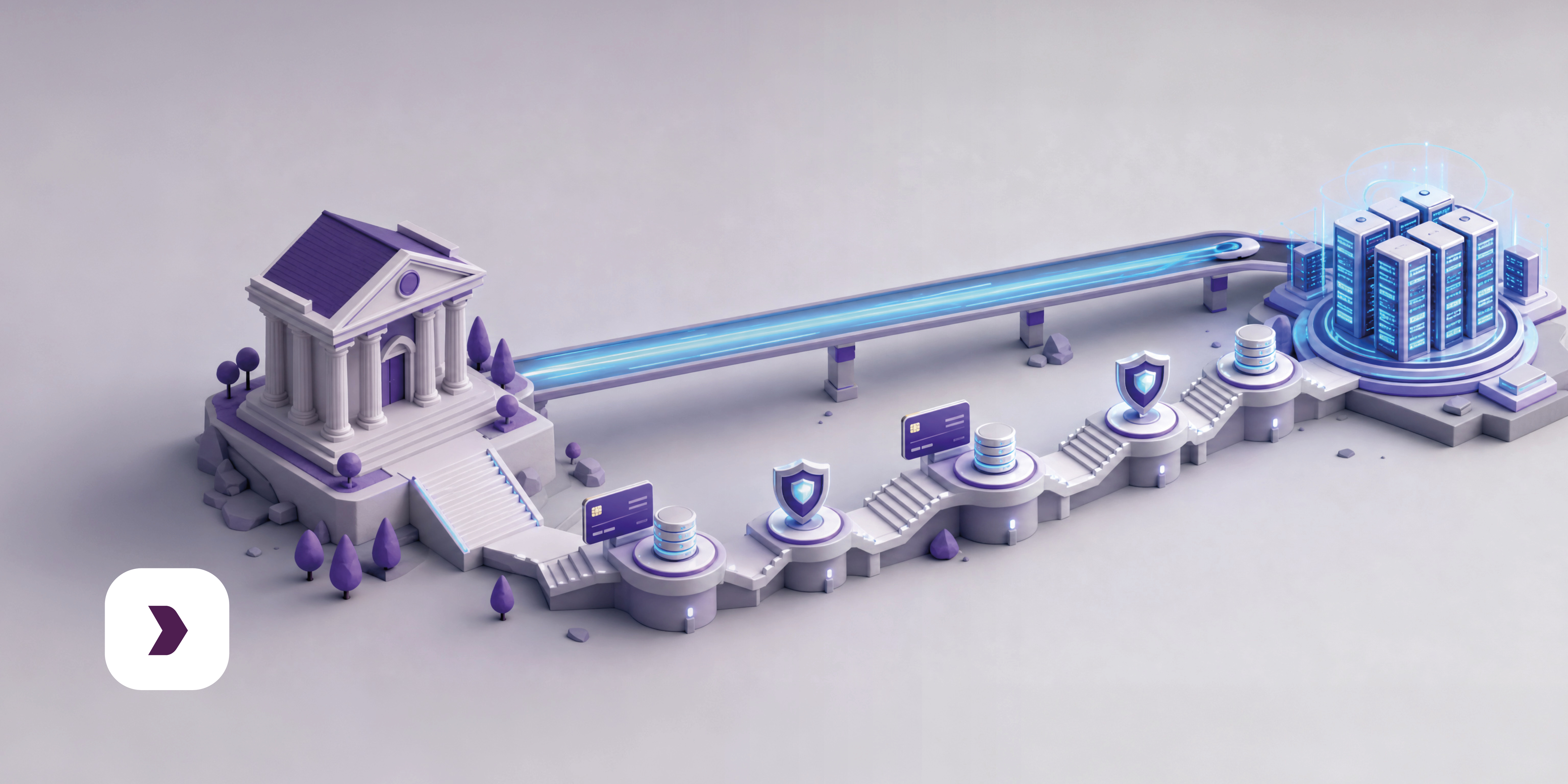
Migrating to a modern payments platform is not simply a matter of replacing technology. Banks must move data, products and system connections while ensuring that cards, ATMs and other payment services continue to work throughout the transition.
One of the most important decisions is how that migration should take place. A bank can move the agreed scope during one controlled cutover, known as a Big Bang migration, or divide the programme into a series of smaller phases.
The choice is often presented as speed versus safety, but the difference is more complex. A Big Bang migration concentrates preparation and risk around one cutover, while a phased migration spreads the work across a longer period and requires old and new systems to operate together.
Neither approach is automatically safer or more effective. The right route depends on the condition of the legacy platform, the complexity of the bank’s data and integrations, its deadlines and its ability to manage the transition.
The choice is where to carry the complexity
Banks are under pressure to replace ageing payments infrastructure while keeping essential services available. In KPMG International’s 2026 survey of 500 banking and 500 retail payment executives, 53% of banking respondents cited replacing outdated legacy systems as a reason to modernise. Enhancing security, resilience and fraud protection was cited by 69%, while 44% pointed to improving their ability to innovate.
Migration must therefore address two priorities. It must remove the limitations of the existing platform while protecting authorisation, settlement, fraud monitoring, card servicing and customer access during the transition.
The 2024 revised Basel Core Principles for Effective Banking Supervision place greater emphasis on operational resilience. This includes business continuity planning and testing, mapping interconnections and interdependencies, and setting a tolerance for disruption to critical operations. While the principles do not prescribe a particular migration model, they support choosing an approach that reflects the bank’s operational dependencies and ability to manage disruption.
Big Bang works when the bank is ready for one decisive move
A Big Bang migration transfers the agreed scope to the new platform during one tightly controlled window. The legacy environment is shut down, the new system is activated and transactions are validated before normal business resumes.
The main advantage is immediate simplification. The bank does not have to run duplicate platforms for an extended period, maintain temporary routing rules or ask operational teams to work across two sources of truth. Once the cutover is complete, the migrated business operates on the target environment.
This route can suit a platform approaching end of support, an operationally fragile legacy system, a fixed regulatory or scheme deadline, or a portfolio whose scope and dependencies are clearly defined. It may also be the more controlled option when maintaining two environments would introduce more risk than retiring the old one quickly.
The pressure is concentrated before and during go-live. Data conversion, BIN configuration, payment-scheme connections, token inventories, settlement, reconciliation, customer communication and support procedures must be proven in advance. A dependency discovered after cutover can affect the entire migrated portfolio.
For this reason, Big Bang depends on repetition. Mock migrations should demonstrate that data can be converted within the available freeze window. Volume tests should reflect peak rather than average demand. Reconciliation should confirm that balances, transaction histories and operational reports agree. Rollback triggers must be specific enough for a command centre to act on them under time pressure.
Phased migration reduces the impact of each move
A phased Migration divides the transition into controlled waves. A bank may move one BIN at a time, separate debit, credit and prepaid portfolios, begin with a defined customer segment or place new accounts on the modern platform while migrating the existing portfolio progressively.
Each box can be tested against real transaction behaviour before the next begins. If an issue emerges, the affected group is smaller and the wider portfolio can continue operating. Teams can refine configuration, reporting, fraud rules and customer-support procedures using what they learn from each release.
This route is particularly useful when the legacy estate contains several products, channels and connected systems that cannot all move at the same time. It also allows existing integrations and scheme certifications to be reused while individual components are replaced.
The trade-off is coexistence. For a period, the bank must control transactions and data across old and new environments. Authorisation may occur on one platform while reporting, settlement or servicing still relies partly on another. Daily reconciliation, clear ownership and source-of-truth rules become essential.
Phasing can also become expensive if it loses momentum. Temporary interfaces require support, operations teams maintain dual procedures and the legacy platform continues consuming budget. Without entry and exit criteria for every wave, an interim architecture can become a permanent one.
Data and integrations often decide the route
The condition of the data is one of the clearest dividing lines. Big Bang requires the full migration dataset to be prepared and reconciled before go-live. Phased migration reduces the amount moved at one time, but it requires the bank to apply consistent conversion rules across repeated waves. A defect corrected in the first box must not return in the fifth.
Integration architecture matters just as much. A single cutover works best when connected systems can adopt the new interfaces together. A phased approach is more practical when some channels, processors or internal applications need to retain existing connections temporarily.
The bank must also consider how long the legacy platform can remain dependable. A phased programme assumes it can continue supporting live business throughout the transition. If the system is unstable, unsupported or costly to operate, extending coexistence may create more exposure than a well-rehearsed Big Bang cutover.
Organisational capacity creates another distinction. Big Bang requires intense mobilisation across technology, operations, finance, fraud, customer service and executive governance. Phased migration lowers the peak, but asks the same teams to sustain dual operations and repeated release cycles for longer. One model concentrates effort; the other extends it.
Migration models can be combined
The choice does not always need to apply to every part of the programme. A bank may move the main switch and card portfolio in one cutover while retaining selected protocols until later. A phased portfolio programme may still use a Big Bang event within each migration box.
This blended approach can protect a critical deadline without forcing every dependency into the same release. It can also keep non-critical integration changes away from the core transaction cutover. The boundaries must be deliberate: each retained component needs an owner, a controlled interface and a date for retirement.
Readiness matters more than the label
Big Bang is the stronger fit when the scope is clear, the legacy platform cannot remain in service for long and the bank can prove readiness through repeated rehearsals. Phased migration is better suited to an estate that can be divided cleanly, where continuity is the overriding priority and the organisation can govern two environments without allowing coexistence to become permanent.
Neither approach compensates for weak preparation. In both models, banks must map data and integration dependencies, agree source-of-truth rules, test reconciliation and peak capacity, define rollback triggers and maintain structured hypercare after go-live.
BPC has supported more than 300 legacy migrations. SmartVista can be introduced through a single cutover, sequential migration boxes or a combination of both, while existing integrations and certifications are retained where necessary. The objective is not to defend one methodology. It is to select the route that the institution can control and reach a modern platform without weakening the services customers already depend on.
Read BPC's Modernisation Without Disruption guide to compare all four migration approaches and the preparation required before go-live.
Latest articles
Big Bang VS phased migration: main Benefits and Drawbacks
The hidden costs of delaying payments modernisation
Why traditional issuers need to rethink their card processing operating model
What financial institutions should look for in a SoftPOS platform
7 reasons why banks should introduce SoftPOS