






The Fine Art of Modernisation

Modernisation is often explained through frameworks and migration approaches, but its real value becomes clearer when looking at how it is delivered in practice. Across markets, financial institutions are already moving away from legacy environments toward cloud-ready systems that can support higher volumes, more integrations, and keep pace with changing customer expectations.
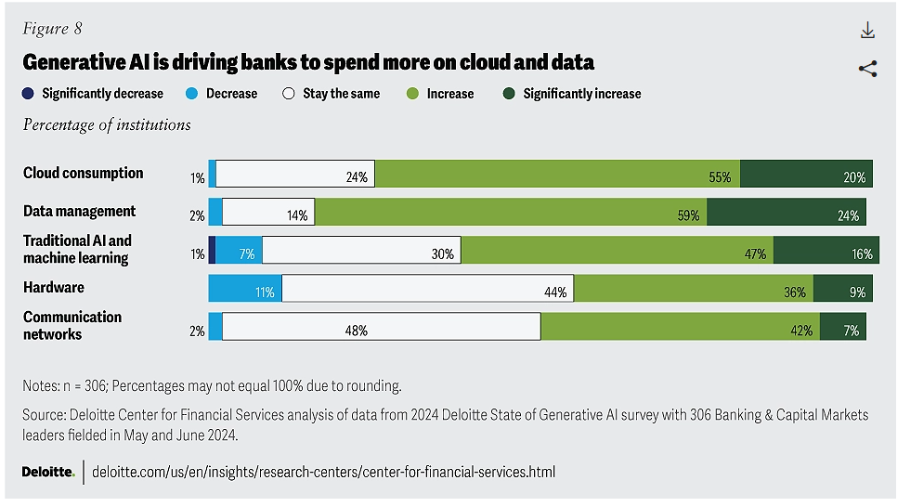
The shift is being driven by real pressure. According to Deloitte, key drivers of core modernisation lie in emergence of Generative AI tools and modern technology, that force banks to spend on more on modern cloud-native platforms to avoid vendor lock-ins and obtain flexible cost-efficient infrastructure.
As transaction volumes increase and digital channels expand, older systems struggle to keep pace with processing demands, integration requirements, and regulatory changes. McKinsey supports this saying that, many banks face challenges in extracting value from technology investments, as spending is often distributed across multiple initiatives with limited measurable impact.
What this shows is that change is already underway. The question is no longer whether to modernise, but how to do it in a way that does not disrupt day-to-day operations.
From strategy to execution
Migration strategies provide direction, but delivery depends on how these plans are applied within real operating environments. Each institution works within its own constraints, whether it is managing high transaction volumes, supporting national payment schemes, or maintaining service availability during system changes.
What stands out across successful projects is not a single method, but a consistent approach to managing change. Instead of replacing systems all at once, many institutions introduce new capabilities gradually, allowing existing operations to continue while improvements are rolled out in stages.
This reflects a more practical way of approaching transformation. Rather than following rigid implementation models, projects are shaped around the institution’s requirements, timelines, and risk tolerance. Preparation, validation, and integration are handled step by step, ensuring that systems continue to perform as expected throughout the transition.
Real-world examples
Across regions, institutions are solving different problems, but the objective remains similar, to support growth without adding complexity or risking service disruption.
In Tanzania, CRDB Bank was managing a growing multi-country operation across Tanzania, Burundi, and the Democratic Republic of Congo, where increasing transaction volumes and expanding services were placing pressure on its existing infrastructure. The challenge was not only to scale, but to unify issuing and acquiring capabilities across its network without disrupting ongoing operations. By migrating to a modern, microservices-based environment, the bank was able to consolidate its ecosystem, streamline processing, and strengthen integration across channels, including mobile and agency banking. This allowed CRDB to expand its card offering, support new services, and scale more efficiently across markets, with over 4.5 million cards issued through the upgraded platform.
In Chile, Klap focused on scaling its acquiring business at a time when transaction volumes were rising rapidly. Its existing setup was becoming increasingly difficult to manage at scale, particularly as demand grew for broader scheme support and faster service delivery. By moving to a cloud-based, SaaS operating model, Klap was able to modernise its processing infrastructure and launch Visa and Mastercard acquiring within a more adaptable environment. The shift enabled the organisation to handle around 90 million transactions per month while improving flexibility in how services are configured and delivered, laying the groundwork for further expansion across additional payment schemes and merchant services.
In Lithuania, Artea Bank focused on modernising its issuing capabilities to support faster product rollout and meet evolving regulatory requirements. Its existing setup limited how quickly new card programmes could be introduced and integrated with digital services. By moving to a cloud-native, SaaS-based environment, the bank was able to streamline issuing operations and support tokenised payments through Apple Pay and Google Pay, while strengthening compliance with EU standards. The shift also enabled Artea to bring new card products to market more quickly and integrate more easily with internal systems and external partners, creating a more adaptable foundation for future expansion.
In Cambodia, ACLEDA Bank focused on strengthening its infrastructure to support rapid growth in digital payments and expanding services across its network. As transaction volumes increased and new channels were introduced, the bank needed a more connected environment that could support both issuing and acquiring while integrating with national systems and partner institutions. Through a phased transition to a more modular setup, ACLEDA was able to unify its operations, improve integration across channels, and support a broader ecosystem, including hosting other banks within the Cambodia Shared Switch. This enabled the bank to scale its card base and digital services significantly, with card issuance growing to over two million and merchant acceptance expanding rapidly, reflecting strong adoption across the market.
While the starting points differ, the outcome is shaped by similar decisions. Change is introduced in a controlled way, systems are connected rather than replaced outright, and disruption to existing services is kept to a minimum.
These examples also show that migration is rarely tied to a single model. It is usually a combination of staged rollout, integration with existing infrastructure, and careful coordination across systems. The ability to adjust along the way often has more impact than the initial plan itself.
BPC brings more than 25 years of experience and a track record of over 400 successful migrations, supporting customers through every stage of the transformation journey with a strong focus on control, continuity, and risk reduction, working closely with each customer to define the migration approach that best fits their timelines, budget, and risk appetite, and execute it with minimal to no disruption to day-to-day operations across implementation, go-live, and stabilisation. SmartVista includes a wide range of built-in interfaces and migration-enabling capabilities developed and refined through numerous successful transitions from different legacy vendors. That give BPC a right angle to handle and convert legacy data formats so they can be processed through standard migration scripts, while also helping customers rationalise, cleanse, and optimise the volume of data to be migrated. In addition, BPC SmartVista offers a rich set of APIs for easy low-to-no-code integration with third-party systems, along with a broad range of user exits for platform customisation and enhancement, including plugins, stored procedures, containers, reporting tools, and data extracts. Together, these capabilities make implementation faster and more efficient, reducing the need for extensive core development and lengthy testing cycles.
The way forward
At the end of the day smart migration is not just a technology upgrade, but a business transformation that delivers immediate cost savings from a predictable financial model, enhanced operational agility and faster innovation, and a scalable, future-proof platform ready to meet evolving market demands.
The pressure on banks to adapt will only increase. Agentic Commerce, Generative AI, and other emerging tools will only add to it. Progress does not come from large-scale replacement alone, but from making deliberate changes that reflect operational realities and evolving market demands. The success depends on how well institutions introduce new capabilities while keeping systems stable and connected. Those that approach it with clarity and the ability to adjust along the way are better positioned to scale, integrate, and grow without disruption.
Latest articles
Big Bang VS phased migration: Main Benefits and Drawbacks
The hidden costs of delaying payments modernisation
Why traditional issuers need to rethink their card processing operating model
What financial institutions should look for in a SoftPOS platform
7 reasons why banks should introduce SoftPOS