






The Rise of SoftPOS. When the checkout moves into the merchant smartphone.
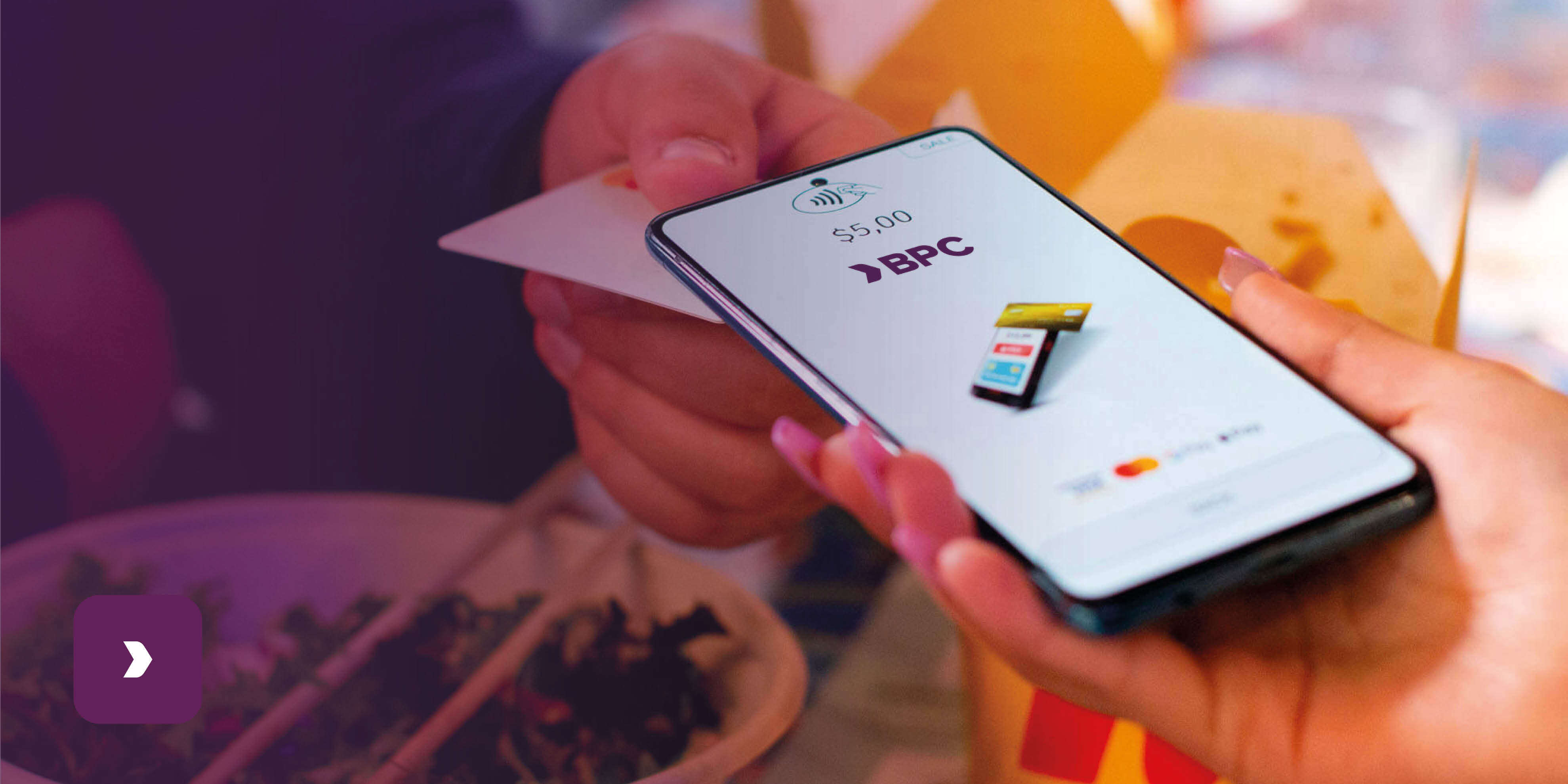
Walk into any store today and the checkout looks familiar. A counter, a terminal, maybe a queue forming behind it. But what’s changing isn’t always visible.
The way payments are accepted is beginning to extend beyond the device itself. For years, acceptance has been closely tied to hardware. If a business wanted to take card payments, it needed a terminal, typically fixed to a specific location. That model worked well when payments were predictable and tied to a single point of sale. Today, however, transactions are no longer confined to one place.
The checkout is no longer a place
There are now billions of smartphones in circulation, many already equipped with NFC and connected to payment networks. At the same time, customer behaviour has shifted just as quickly. Payments are expected to be fast, contactless, and seamless within the overall experience.
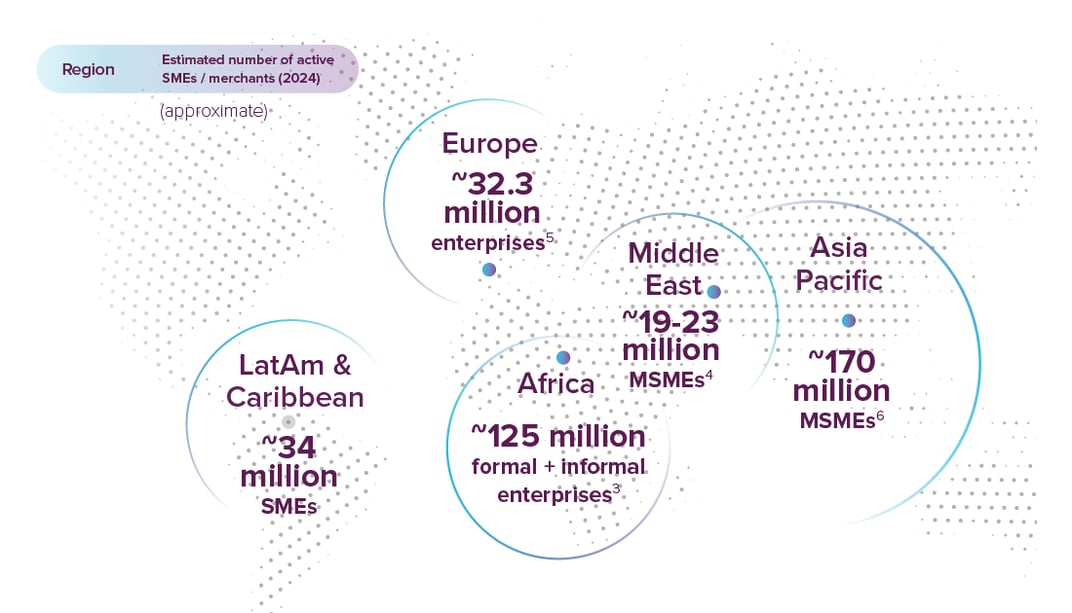
The broader data points reflect the same shift. Today, around 5.6 billion people globally already carry a mobile subscription, representing close to 70% of the population, and that number continues to grow steadily, according to GSMA research. At the same time, contactless payments are scaling at a much faster pace. Based on Juniper’s findings, transaction values are expected to rise from $7.4 trillion in 2024 to $15.7 trillion by 2029, more than doubling within just five years. This goes inline with the growing number of merchants, according to the newly released BPC Guide “Powering your merchant network with SOFTPOS”, there were almost 400 million registered merchants in the world in 2024, with APAC and Africa dominating heavily the other regions, and not all of them are having digitalised means of payment acceptance.
What this creates is a gap between merchants and end-user. Customers are used to tapping and moving on, while acceptance is still often concentrated around fixed checkout points. The result is friction in moments where speed and convenience are expected.
Why SOFTPOS matters now
This shift did not happen overnight. Payments have long depended on dedicated hardware because of strict security and certification requirements. While this ensured trust, it also meant that expanding acceptance required time, planning, and physical deployment.
What has changed is the ecosystem around it. Industry standards have evolved to support secure payments on commercial devices, while operating systems have become capable of supporting secure environments natively. This has made it possible to extend payment acceptance beyond traditional setups without compromising security.
At the same time, the market has moved. Deloitte’s research highlights how payments are increasingly shaped by mobile-first behaviour and more integrated digital ecosystems, while merchants continue to look for ways to simplify how they deploy and manage acceptance. With billions of NFC-enabled smartphones already in circulation, the foundation for acceptance is already in place.
What was missing was the ability to activate it securely and at scale. That gap has now been addressed.
SoftPOS, short for Software Point of Sale, is a payment acceptance solution that enables businesses to accept contactless payments directly on NFC-enabled smartphones or tablets, without the need for dedicated point-of-sale hardware.
Instead of relying on traditional terminals, SoftPOS allows merchants to install an application, complete onboarding, and begin accepting payments within minutes. Transactions can be made using cards, digital wallets, or wearables, and are processed through the same card networks and security frameworks as conventional POS systems.
This approach builds on existing payment infrastructure while introducing a more flexible way to enable acceptance, particularly in environments where mobility, speed of deployment, or cost efficiency are important considerations.
SOFTPOS vs traditional terminal
Today, businesses have access to a range of payment acceptance models, each designed for different environments.
Traditional POS systems remain widely used in high-volume retail settings, where stability, speed, and integration with broader systems are critical. At the same time, mobile POS devices, smart terminals, and software-based solutions have expanded what acceptance can look like in practice.
| Device Type | Terminal Evolution | Typical Use Case | Purpose |
|---|---|---|---|
| Traditional POS | Fixed, hardware-based payment terminal | Supermarkets, large retail chains | Fixed hardware, higher deployment effort, suited for high-volume, fixed environments |
| mPOS | Mobile POS paired with phone or Android device | Small businesses, mobile retail | Mobile hardware-based acceptance |
| Smart PIN Pad | Customer-facing PIN pad integrated with existing systems | Supermarkets, large chains | Extends existing POS systems while retaining familiar checkout experience |
| Smart POS | All-in-one Android terminal with business applications | Restaurants, full-service retail | Rich device functionality with integrated business services |
| SoftPOS | Payment app running on NFC-enabled smartphone | Micro-merchants, delivery, field services | Software-only, fast deployment, lower hardware dependency, ideal for mobile and underserved merchant segments |
Each of these models serves a different purpose. High-volume environments may continue to rely on fixed terminals, while more mobile or flexible setups benefit from lighter solutions. SoftPOS fits within this mix as an option that extends acceptance into new contexts, rather than replacing existing infrastructure.
SoftPOS typically supports:
- Software-based payment acceptance without dedicated hardware
- Faster onboarding and deployment compared to traditional setups
- Acceptance of cards, digital wallets, and wearables on a single device
- Greater flexibility for mobile, distributed, or temporary environments
The adoption of this model is accelerating. The number of merchants using SoftPOS is expected to grow from around 6 million in 2022 to more than 34 million by 2027, reflecting a growing demand for lighter, software-based acceptance options.
What this enables is not a replacement of existing systems, but an extension of them. Businesses can continue to rely on dedicated terminals where they are most effective, while using software-based acceptance to support additional scenarios. This might include adding temporary checkout points during peak periods, enabling mobile teams to accept payments in the field, or supporting pop-up and seasonal operations without the need for new infrastructure.
Why SOFTPOS matters for financial institutions
The direction of travel is becoming clearer. Payment acceptance is moving toward a more adaptable model, where different form factors work together to support a wider range of business needs.
SoftPOS is the latest chapter in a long journey that began with manual cash registers a century ago, shifted to magnetic-stripe terminals in the 1970s and to chip-and-PIN in the 1990s, and now places the point-of-sale inside the merchant’s own smartphone.
For banks and payment providers, this introduces a different set of considerations. Expanding acceptance will no longer be defined by hardware rollout alone, but by how quickly and effectively new merchant segments can be reached and supported across different environments. For bank acquirers the opportunity extends far beyond replacing terminals. A software stack lets them embed value-added services from loyalty, BNPL, inventory to pay-by-link directly in the payment flow, creating fee income and richer data without additional capex.
To explore how financial intuitions can use SOFTPOS to expand merchant acceptance faster, lower hardware dependency, and unlock new service-led revenue opportunities, download BPC’s guide, Powering Your Merchant Network with SOFTPOS.

Latest articles
Big Bang VS phased migration: Main Benefits and Drawbacks
The hidden costs of delaying payments modernisation
Why traditional issuers need to rethink their card processing operating model
What financial institutions should look for in a SoftPOS platform
7 reasons why banks should introduce SoftPOS