



How SMEs can benefit from SoftPOS technology?
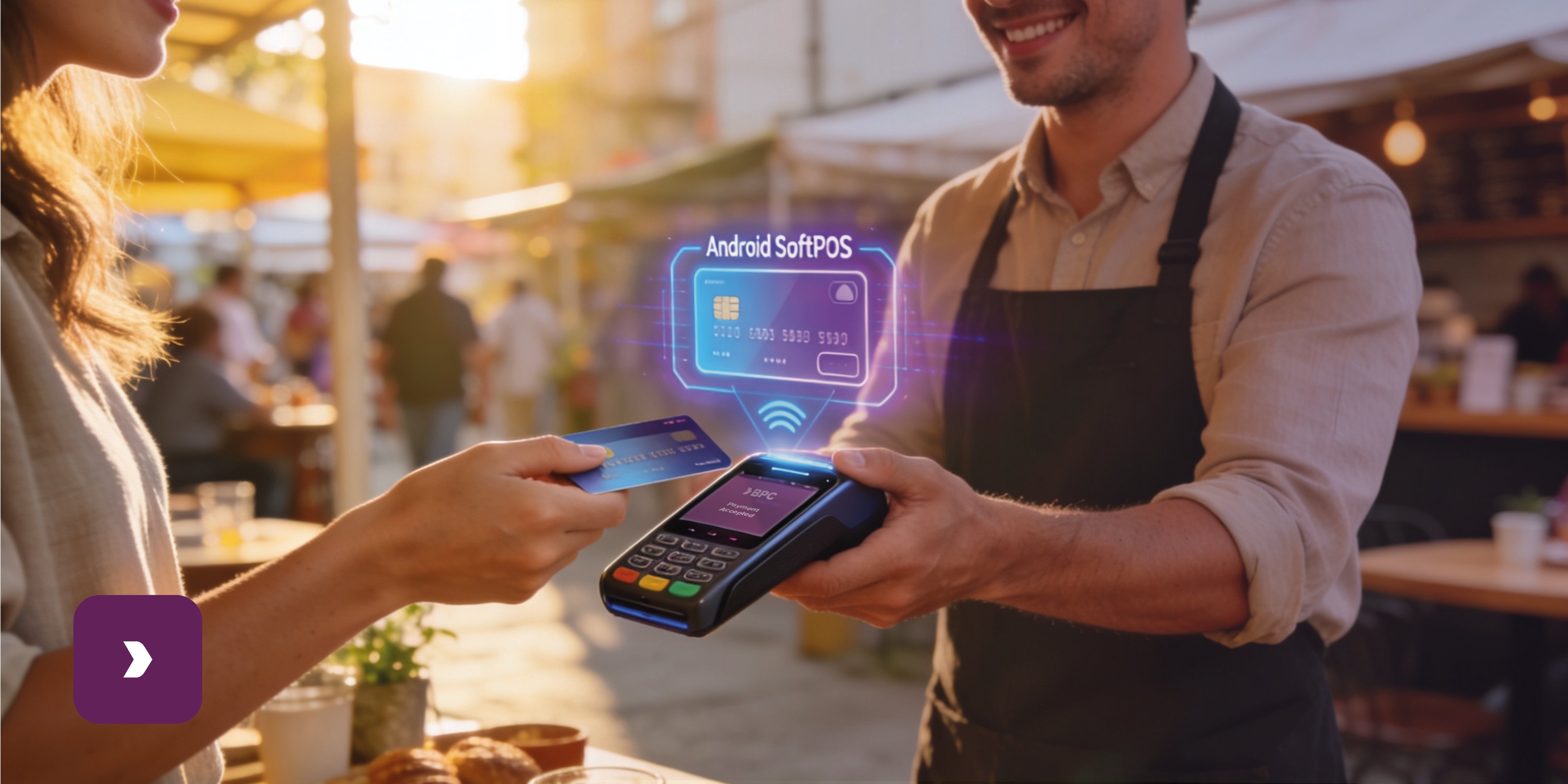
Everywhere a payment takes place, for instance at street stalls, coffee counters, dining tables or ticket aisles, SoftPOS can replace the dedicated card reader with the smartphone that is already in a worker’s hand.
SoftPOS has gained attention because it changes how payment acceptance can be deployed in day-to-day environments. Instead of being limited to fixed checkout points, businesses can extend acceptance into the places where transactions naturally happen, whether that is at the table, on delivery routes, in transport networks, or within smaller retail setups.
The scale of adoption is also accelerating. Juniper Research forecasts that 61 million smartphones globally will be using SoftPOS by 2028, representing growth of 683% from 2023 levels. At the same time, SoftPOS transaction value is projected to grow by 2,150% between 2025 and 2030, reaching $540 billion globally by the end of the decade. These figures reflect growing demand for more flexible, software-based acceptance models across both merchant and acquiring environments.
SoftPOS brings payment acceptance closer to the customer
Traditional POS systems continue to play a central role in high-volume retail environments where stability, speed, and integration remain critical. However, many transactions no longer happen at a single checkout counter.
Restaurants now process payments directly at the table. Delivery drivers complete transactions at the doorstep. Temporary retail setups and seasonal merchants often need to start accepting payments immediately without waiting for hardware deployment.
SoftPOS supports these environments by allowing businesses to enable payment acceptance on devices already in use. Rather than introducing a completely separate payment flow, it extends acceptance into situations where mobility and flexibility matter most.
The guide highlights several examples where this becomes particularly relevant. Small merchants can begin accepting contactless payments without investing in additional terminals, while cafés and restaurants can support table-side payments and digital loyalty interactions from the same device.
| Sector | Merchant pain-point | Benefit with SoftPOS | How it works in practice |
|---|---|---|---|
| Grocery kiosk | Long queues at lunch hour | Adds ad-hoc checkouts without extra tills | Staff smartphone becomes an extra lane; digital receipt only |
| Independent café | Card-reader rental too costly | No capex; tips captured digitally | Owner’s Android phone runs MPoC app; tips enabled in UI |
| Restaurant | Pay-at-table & split bills | Closes sale at table, faster table-turn | Waiter tablet launches SoftPOS, fetches bill from POS API, accepts pay |
| Transport conductor | Cash handling & ticket fraud | Real-time fare validation | Rugged handheld with SoftPOS taps card, writes ticket record to cloud |
| Government field officer | Remote tax collection | Instant e-receipt & geo-tag | Officer’s phone issues QR e-invoice, collects card tap |
| Fuel delivery | Down-time of GPRS terminals | Lightweight, always-connected | Driver phone accepts contactless, uploads transaction over LTE |
| Parking attendant | Broken meters | Mobile POS replaces fixed unit | Device issues digital permit after tap; enforcement app verifies |
| Large retailer pop-up | Seasonal outlet, short lease | Avoids shipping hardware | Staff borrow phones from HQ, SoftPOS licensed for the event |
What stands out across these use cases is that SoftPOS is not only changing where payments happen, but also how quickly businesses can adapt acceptance around operational needs.
Real-world example of GCash PocketPay and SoftPOS in the Philippines
Let’s take a look at a real life example of GCash PocketPay in the Philippines. GCash PocketPay allows NFC-enabled Android devices to function as payment acceptance points, helping expand card-present and contactless payments across the GCash for Business ecosystem. The solution was introduced to support more than 6 million Filipino businesses, merchants, and social sellers already operating through the platform.
What makes this example significant is not only the technology itself, but the operational challenge it addresses. Many MSMEs and smaller merchants continue to face barriers linked to terminal deployment, hardware costs, and onboarding complexity. By allowing merchants to accept Visa and Mastercard contactless payments directly on Android devices, GCash PocketPay expands digital acceptance into merchant segments that may previously have relied entirely on cash.
The implementation also reflects a broader shift in how acquiring platforms are evolving. Beyond card acceptance, the platform is designed to support QRPH and GCash closed-loop QR payments within the same acquiring environment, helping unify card and QR payment flows across channels.
SoftPOS is no longer only about enabling payments on smartphones. It is becoming part of a broader acquiring and merchant management strategy, where software-based acceptance can support multiple payment types, faster onboarding, and a more scalable merchant ecosystem.
Why SoftPOS is becoming part of the future of SME payment acceptance
As acceptance moves onto software, payments become part of a wider operational workflow.
SoftPOS applications can support digital receipts, loyalty programmes, QR interactions, inventory visibility, and cloud-based reporting alongside the transaction itself. This allows merchants to manage more of their operations from a single environment. Because a SoftPOS handset can be activated whenever queues build, retailers eliminate bottlenecks at peak times, protecting basket abandonment and preserving turnover that would otherwise leak to cash or competitors.
Although SoftPOS is often introduced as a benefit for micro-merchants, it creates equally compelling economics for acquiring banks that serve mid-market and enterprise merchants and embed additional services such as instalments or loyalty directly into the merchant experience.
At the same time, this does not replace traditional terminals. Fixed POS systems remain essential in many high-volume retail environments, while SoftPOS expands acceptance into mobile, smaller, or more distributed operations.
What is emerging is a more adaptable acceptance landscape, where businesses use different models depending on the operational need and the broader direction is becoming clearer. Payment acceptance is moving toward models that are easier to deploy, manage, and integrate into everyday business operations.
SoftPOS is part of that shift, not because it replaces every existing setup, but because it extends acceptance into environments where traditional approaches may be harder to scale efficiently.
In the next part of this series, we will look at what banks and payment providers should consider when evaluating SoftPOS solutions, from deployment and onboarding to security, certification, and value-added services.
FAQ
1. What is SoftPOS?
SoftPOS is a software-based payment acceptance solution that allows merchants to accept contactless payments directly on NFC-enabled smartphones or tablets, without using a dedicated card payment terminal.
2. How can SMEs benefit from SoftPOS?
SMEs can use SoftPOS to accept digital payments more easily, reduce dependency on physical terminals, support mobile checkout, serve customers at the table or doorstep, and start accepting payments faster in temporary or distributed business environments.
3. Does SoftPOS replace traditional POS terminals?
No. SoftPOS does not replace traditional POS terminals in every environment. Fixed POS terminals remain important for high-volume retail and complex checkout operations. SoftPOS extends acceptance into mobile, smaller, temporary, or flexible use cases where traditional hardware may be harder to deploy.
4. What types of businesses can use SoftPOS?
SoftPOS can be used by small retailers, cafés, restaurants, delivery services, taxi drivers, market sellers, social sellers, seasonal merchants, transport operators, and larger businesses that need mobile or queue-busting payment acceptance.
5. Why is SoftPOS important for the future of payment acceptance?
SoftPOS is important because payment acceptance is becoming more mobile, software-based, and integrated with wider merchant services. It helps banks, payment providers, and merchants expand digital acceptance while supporting additional services such as loyalty, QR payments, digital receipts, reporting, and faster merchant onboarding.

Latest articles
The hidden costs of delaying payments modernisation
Why traditional issuers need to rethink their card processing operating model
What financial institutions should look for in a SoftPOS platform
7 reasons why banks should introduce SoftPOS
AI is changing fraud faster than many banks can adapt